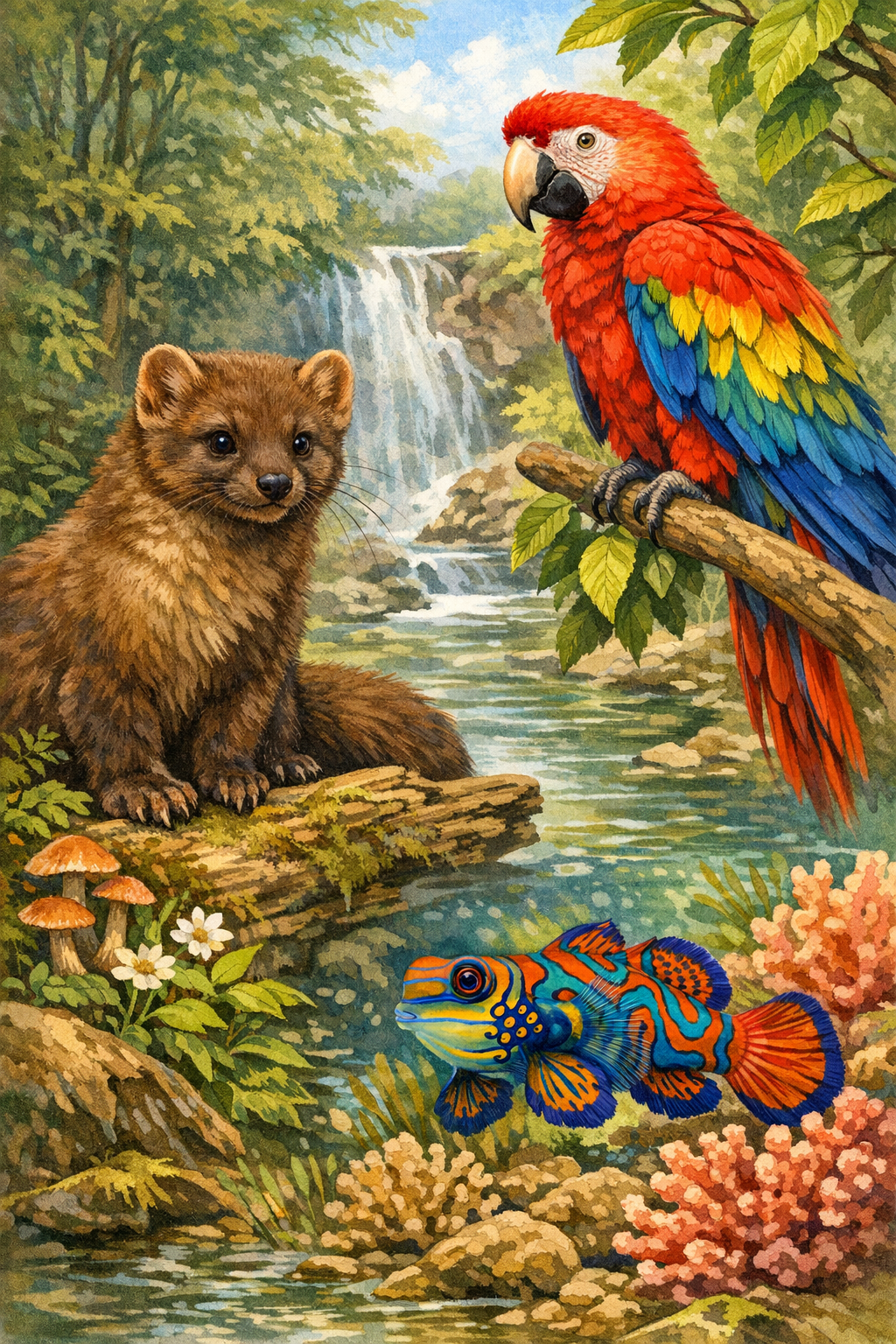
Have you ever noticed that mammals tend to wear nature’s basic colors—browns, blacks, and grays—while birds, fish, and reptiles can sport wild, bright hues? This difference quietly shapes how these animals live and interact with their world.
Why This Matters
Colors in animals aren’t just for show. They can help with camouflage, attracting mates, or warning off predators. So understanding why mammals are less colorful helps us see how their lifestyles and survival strategies differ.
What Researchers Observed
Scientists found that most mammals have fur in simple colors like brown, black, and gray. Unlike fish or birds, mammals don’t display purple, neon pink, or other striking shades. Their coloration is often about blending into their environments rather than standing out.
How This Affects the Real World
Mammal colors fit their needs for quiet living, whether it’s hiding from predators or sneaking up on prey. Bright colors might make them more visible and vulnerable. Their muted tones work well in forests, deserts, and grasslands where they live.
What This Reveals
The way mammals express color shows a link between how they evolved and where they live. While other animals use color for communication and defense, mammals rely more on other senses or behaviors. Their simpler colors tell a story about their survival strategies.
Insight Casual : Mammals keep it simple with muted fur colors, unlike bright birds and fish. Their subtle shades are a smart survival choice.
Source: Live Science