
Why This Matters
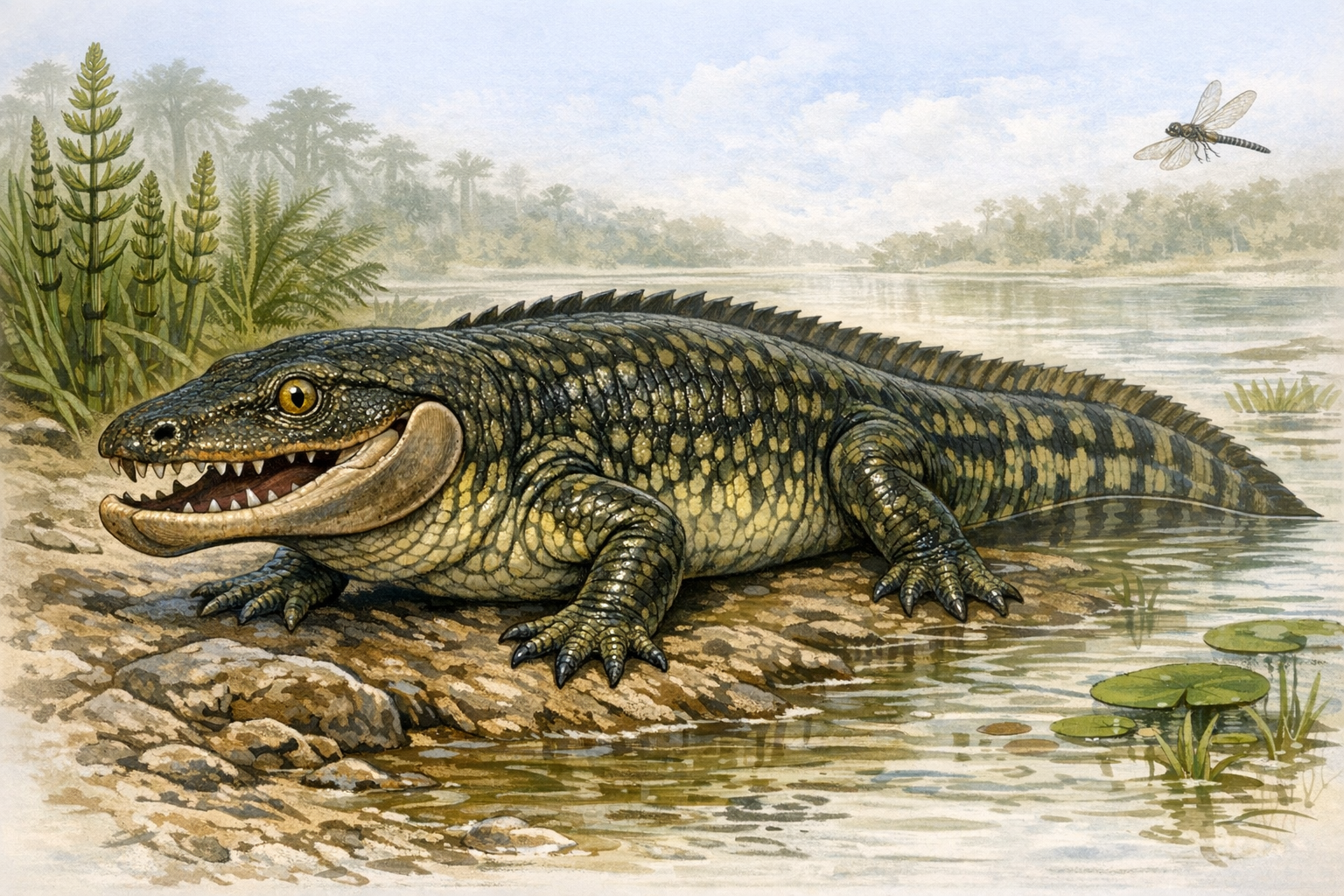
Sometimes, ancient animals don’t fit neatly into our ideas about evolution. A newly studied salamander ancestor, called Tanyka amnicola, has a jawbone that looks very unusual. This discovery helps scientists rethink how salamanders and their relatives evolved over time.
What Researchers Observed
Scientists found a fossil of Tanyka amnicola with a jaw that stands out from other early amphibians. Its shape and structure are not what paleontologists expected. This peculiar jawbone puzzled them because it doesn’t match the typical patterns seen in early salamander relatives.
How This Affects the Real World
Finding an oddball ancestor like Tanyka shows that the evolutionary path of salamanders and similar creatures might have been more complex than previously thought. It suggests that early amphibians experimented with different body shapes and features before settling into the forms we recognize today.
What Happens Next
Scientists will likely continue studying Tanyka and related fossils to better understand early amphibian history. Each new discovery like this one adds clues about ancient life and how modern animals came to be.
Insight Casual : A strange jawbone in an ancient salamander ancestor is reshaping how we think about amphibian evolution.
Source: PopSci