Why This Matters
Jupiter’s moons Europe, Ganymede, and Callisto are not just icy worlds—they may hold clues about life’s beginnings. If these moons started with organic molecules, the key ingredients for life, it changes how we see their potential to host life or at least pre-life chemistry.
What Researchers Observed
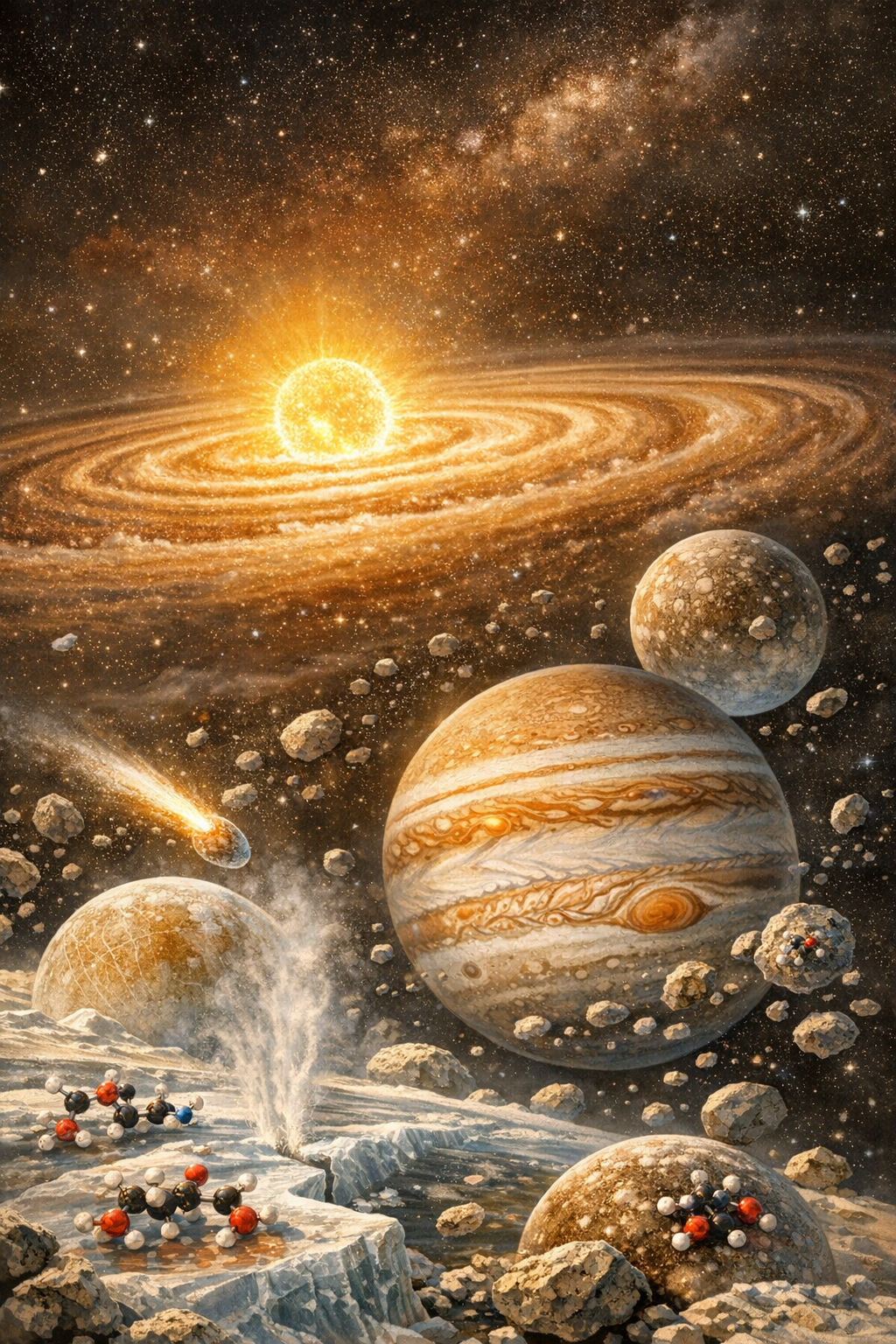
Scientists created computer models that show complex organic molecules could form in the early disk of gas and dust around the young Sun. These molecules might then travel into the area where Jupiter’s moons were forming, mixing with the icy material.
How This Affects the Real World
Finding that half of the icy stuff forming these moons could carry untouched organic compounds hints that the ingredients for life may be common in space. This idea encourages further exploration of Jupiter’s moons as places to search for signs of life or prebiotic chemistry.
What Happens Next
Future missions to Jupiter’s moons might focus on detecting these organic molecules directly. Understanding whether these ingredients survived on the moons could unlock secrets about life’s potential beyond Earth.
Insight Casual : Jupiter’s icy moons might be cosmic carriers of life’s ingredients, formed with organic molecules from the dawn of the solar system.
Source: ScienceDaily