Hidden Messages in Ice
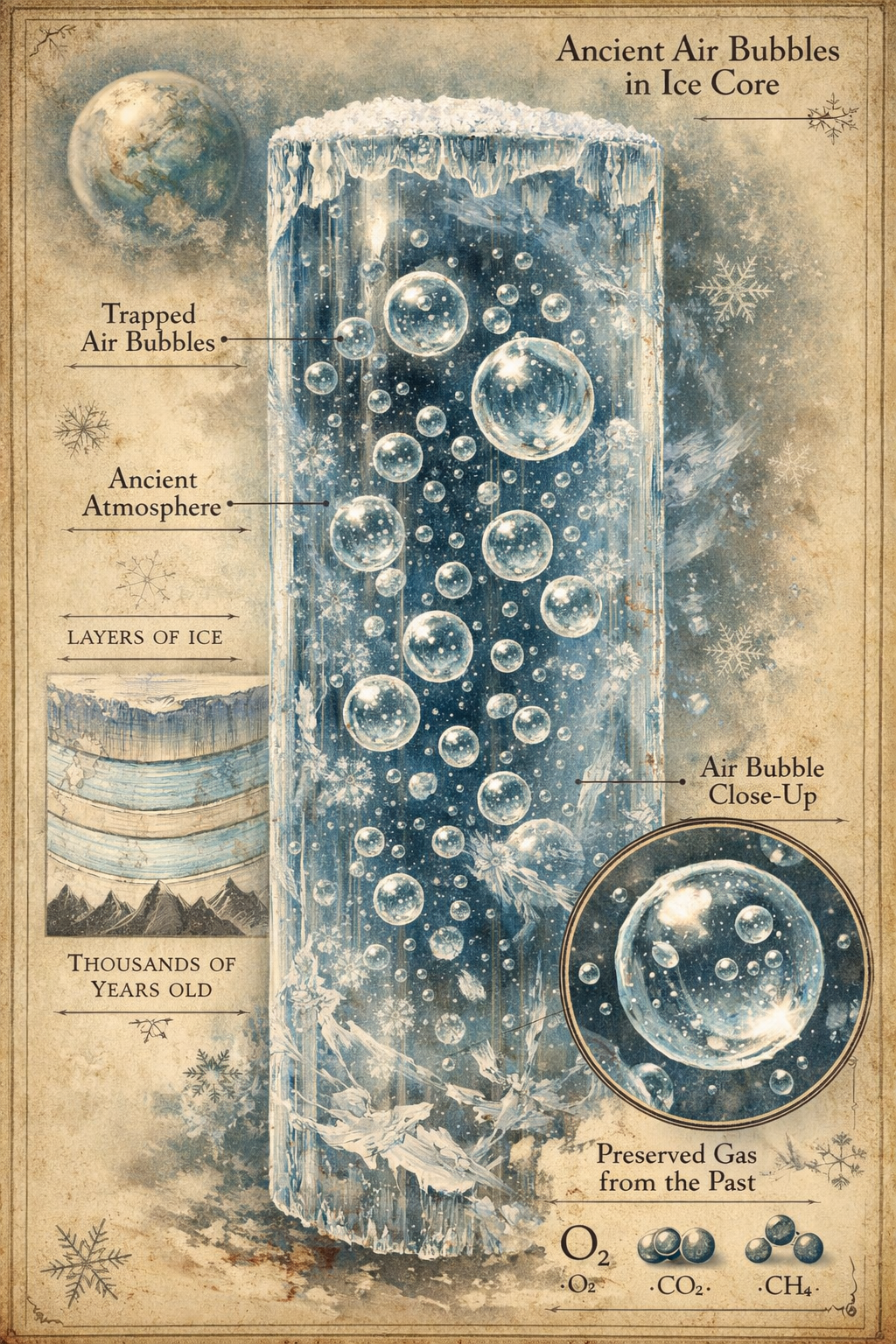
Deep inside ancient ice, tiny bubbles of air have captured clues about the Earth’s atmosphere. These frozen pockets reveal more than just past temperatures—they hint at gases that can affect our climate in surprising ways.
Why This Matters
Scientists found that hydrogen, a gas not often linked to warming, can actually make the atmosphere heat up much faster than carbon dioxide when mixed with other gases. This challenges what we know about climate change and points to a new factor we need to watch closely.
What Researchers Observed
By studying these air bubbles trapped in ice, researchers discovered that hydrogen itself doesn’t directly trap heat. However, when it interacts with other gases, it can speed up warming in the atmosphere. In fact, this effect can be up to eleven times faster than the warming caused by carbon dioxide.
How This Affects the Real World
Understanding this hidden aspect of hydrogen’s impact could change how we think about pollution and climate risks. It suggests that emissions involving hydrogen might have a bigger role in global warming than previously thought, affecting policies related to energy and the environment.
What Happens Next
These findings invite more studies to understand hydrogen’s role and find ways to manage its effect. Scientists will likely keep digging into ice cores and air samples to learn how to better protect our planet’s future.
Insight Casual : Frozen air bubbles show hydrogen can speed up warming 11 times faster than CO2 when mixed with other gases—new clues for climate science.
Source: Popular Mechanics