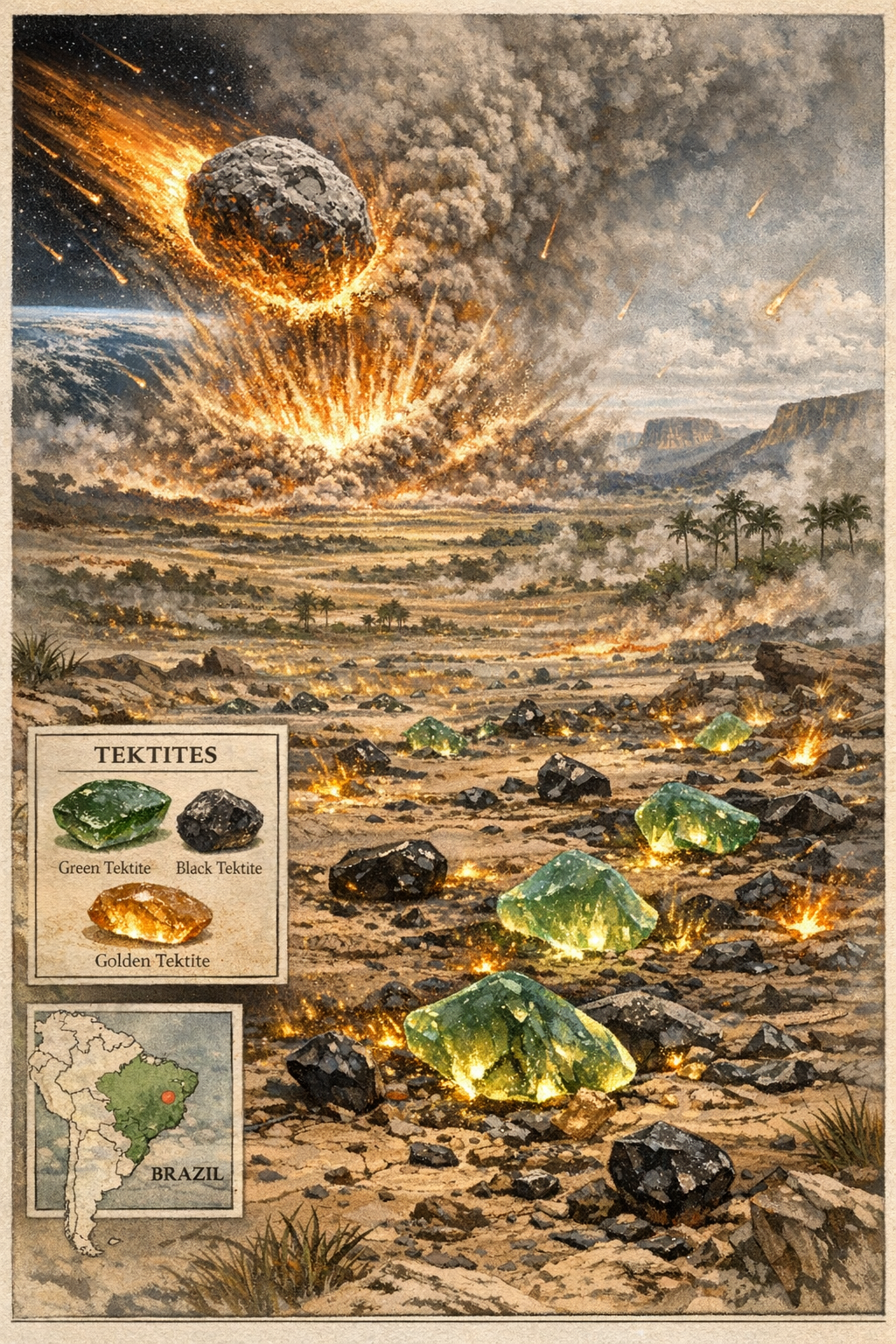
Somewhere in Brazil, around 6.3 million years ago, an asteroid slammed into the Earth. The impact was so powerful that it created a giant spread of glassy fragments, now found across an area of more than 900 kilometers. These natural glasses are called tektites, and the specific ones discovered in Brazil are known as “geraisites.”
Why This Matters
Finding this vast field of glass shows us the scale of this ancient asteroid event. It helps scientists understand how such impacts have shaped South America’s geological history. This discovery is one of the biggest clues we’ve had about past cosmic collisions affecting our planet.
What Researchers Observed
The glass pieces are dark and aerodynamic, shaped like droplets that once melted from the extreme heat of the impact. Their size and spread are unusually large, covering an area stretching over 900 kilometers in Brazil. These are the first giant field tektites ever found in the region.
How This Affects the Real World
Studying these fragments helps us learn about asteroid impacts’ effects on Earth. By understanding where and how such ancient impacts happened, we can better appreciate the natural processes that have influenced the land we live on today.
What Happens Next
Scientists will likely explore the field further to learn more about the impact’s size and its effects on the environment at that time. This discovery may also guide the search for other asteroid impact sites in South America and beyond.
Insight Casual : A massive asteroid struck Brazil 6.3 million years ago, leaving behind a giant natural glass field that reveals Earth’s ancient cosmic history.
Source: ScienceDaily