Discovering a Quiet Connection
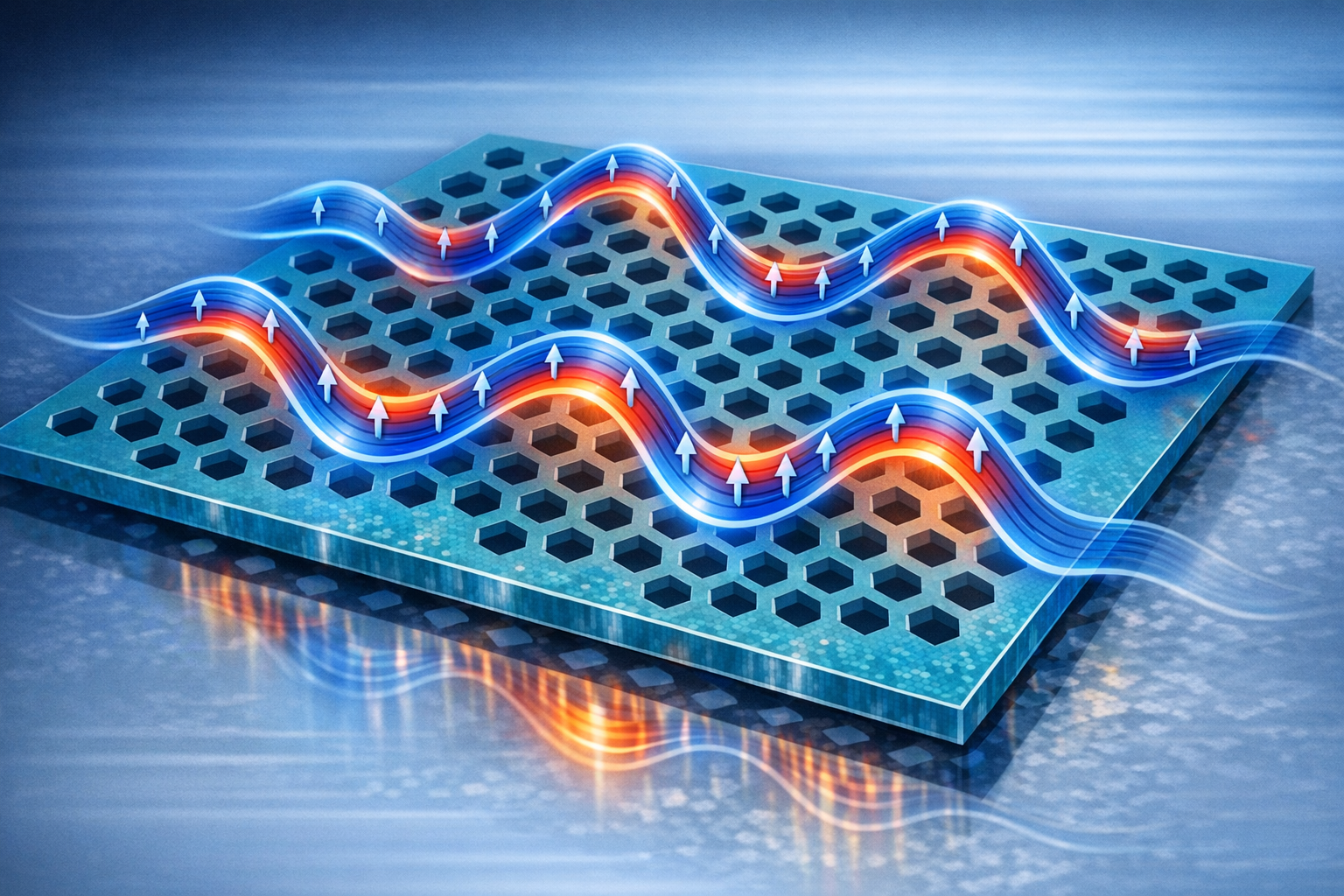
Magnetic materials and graphene—two very different things—are now linked in a surprising way. Engineers found that a special magnetic film with tiny holes can make magnetic waves behave like electrons in graphene, a material known for its unusual properties.
Why This Matters
This discovery connects the world of magnetic waves, called spin waves, with the strange behavior of graphene’s electrons. It opens up new ways to explore magnetic materials by using the rules that govern graphene, which scientists already understand well.
What Researchers Observed
By creating a thin magnetic film patterned with a hexagonal arrangement of holes, similar to graphene’s honeycomb shape, the engineers saw that spin waves followed the same mathematical patterns as graphene electrons. This was unexpected because magnetic waves and electrons are very different physical phenomena.
How This Affects the Real World
This overlap could make it easier for scientists to study complex magnetic systems using ideas from graphene research. It could lead to new magnetic devices or materials with unique properties, emerging from this shared behavior.
What Happens Next
The results encourage further experiments to explore the deep connections between magnetism and electronic materials. This could help uncover more surprising behaviors that blend different areas of physics.
Insight Casual : Magnetic waves can mimic graphene’s electrons in special films, linking two different physics worlds in one discovery.
Source: ScienceDaily