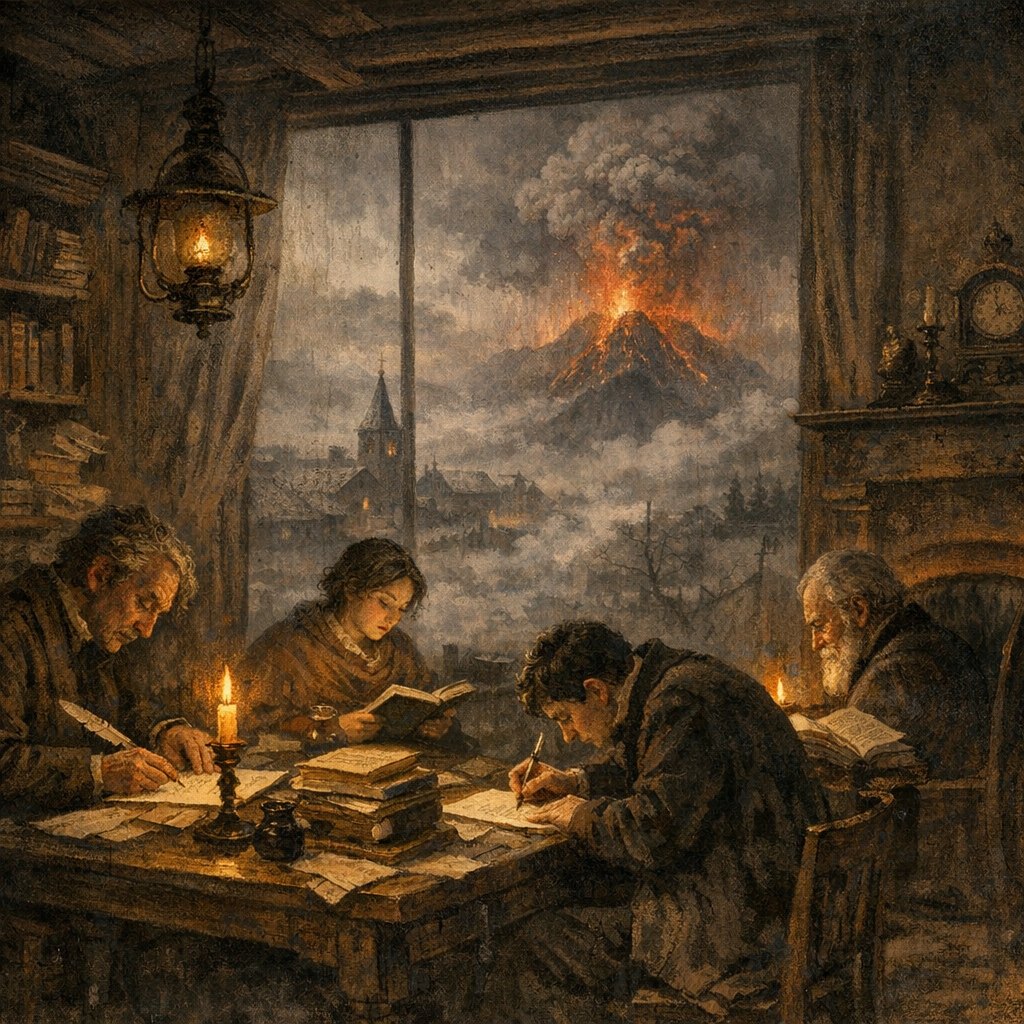
Unexpected Inspiration From a Volcano
In 1816, a volcano in Indonesia caused thick fog and gloomy weather across Europe. This unusual climate change trapped a group of writers and scientists indoors during what later became known as the “Year Without a Summer.”
Why This Matters
The weird weather influenced creativity in a surprising way. One of the people stuck inside was Mary Shelley. The eerie environment around her helped inspire the famous novel Frankenstein, which explores ideas about science and humanity.
What Researchers Observed
Though it wasn’t a scientific experiment, the event showed how natural forces like volcanic eruptions can affect human culture. The volcanic fog blocked sunlight and changed the mood of an entire continent, indirectly shaping literary history.
How This Affects the Real World
This story reminds us that nature’s power reaches beyond the environment. It can shape art, stories, and even scientific thinking. The gloomy days inspired groundbreaking ideas that continue to influence science fiction and discussions about science and ethics.
What Happens Next
Looking back, moments when science and creativity meet under unusual circumstances help us understand how culture evolves. This example encourages curiosity about how natural events can connect with human knowledge and emotion in unexpected ways.
Insight Casual : A volcano’s foggy summer sparked the eerie mood that inspired Mary Shelley’s Frankenstein. Nature’s moods can shape great stories!
Source: WSJ