
Unexpected Spin Flips
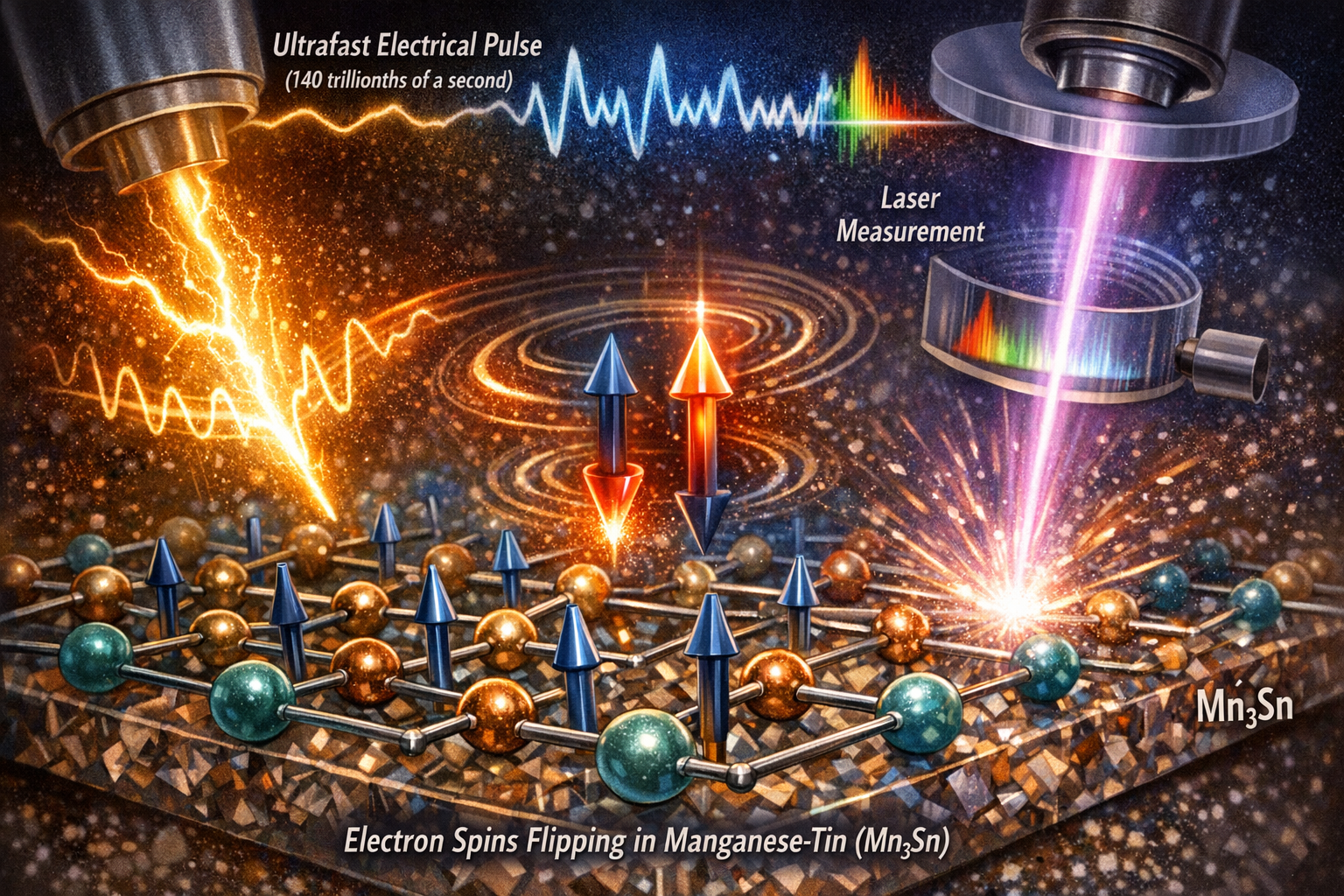
Scientists have, for the first time, seen how tiny magnetic parts inside a special material flip incredibly fast. These parts, called electron spins, are found in something called an antiferromagnet, which used to be thought of as having no magnetism at all. Watching these flips happens in a fraction of a second—140 trillionths of a second—which is faster than anything we had captured before.
Why This Matters
Understanding these quick flips is exciting because antiferromagnets could help build better technology. These materials behave differently from regular magnets, and knowing exactly how their spins change could lead to more efficient ways to store or process information in devices.
What Researchers Observed
The research team used ultrafast electrical pulses on a thin layer made of manganese and tin, then used quick flashes of light to track how the spins flipped. They found two ways the flipping happens: one way uses heat from strong electric currents, while the other flips spins directly without much heat. The second method is cleaner and could be more useful.
How This Affects the Real World
The second method, flipping spins directly with less heat, suggests future electronics could work faster and cooler. Devices could use less energy and avoid overheating, which is a big deal for things like computers and memory chips.
What Happens Next
These findings open the door for more research into materials that behave like antiferromagnets. Scientists will likely explore practical uses and ways to control spins faster and more efficiently, which could change how we design electronics in the future.
Insight Casual : Magnetic spins in antiferromagnets flip in just 140 trillionths of a second—faster and more efficiently than ever seen before.
Source: ScienceDaily