
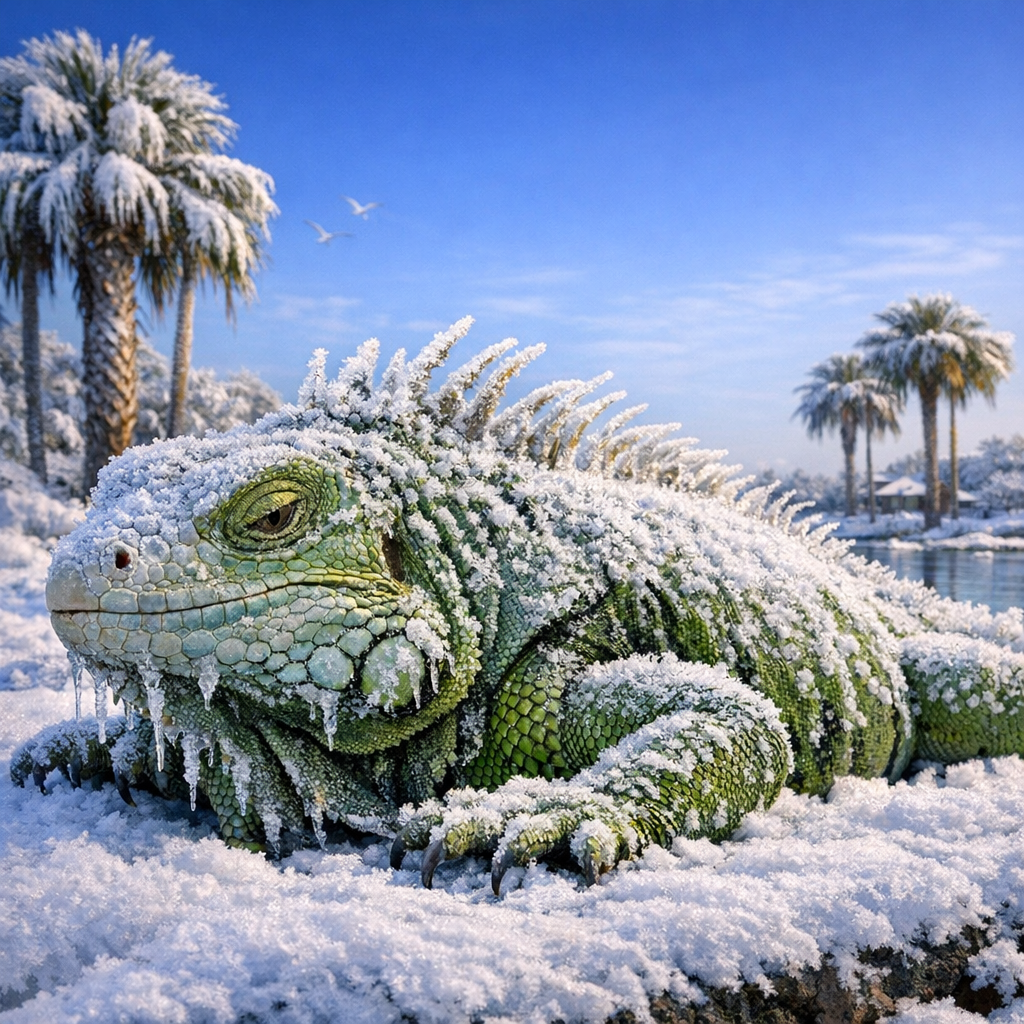
Have you ever wondered what happens to tropical animals when a sudden cold wave hits? In Florida, a recent record-breaking cold snap shocked many, especially an invasive iguana population.
Why This Matters
Iguanas aren’t native to Florida but have been living there since the 1960s. They usually thrive in warm weather, but when temperatures dropped to freezing, many iguanas couldn’t survive. This sudden cold affected their bodies severely.
What Scientists Found
The cold caused the iguanas to go into a kind of shutdown, often called being “cold-stunned.” They became immobile and couldn’t move or warm up. Sadly, many of these reptiles didn’t recover, which led Florida authorities to euthanize about 5,195 iguanas.
The Bigger Picture
These iguanas are considered invasive, meaning they aren’t part of Florida’s natural ecosystem and can harm local plants and animals. The freeze was unusual and highlighted how fragile some species are when it comes to sudden weather changes.
What Happens Next
While thousands of iguanas were lost, the cold snap might help control this invasive species for a time. Scientists and officials will likely keep watching these creatures and how changes in climate affect wildlife that’s not originally from Florida.
Insight Casual : Sudden cold snaps can freeze tropical reptiles like Florida’s invasive iguanas, leading to unexpected wildlife losses.
Source: PopSci